

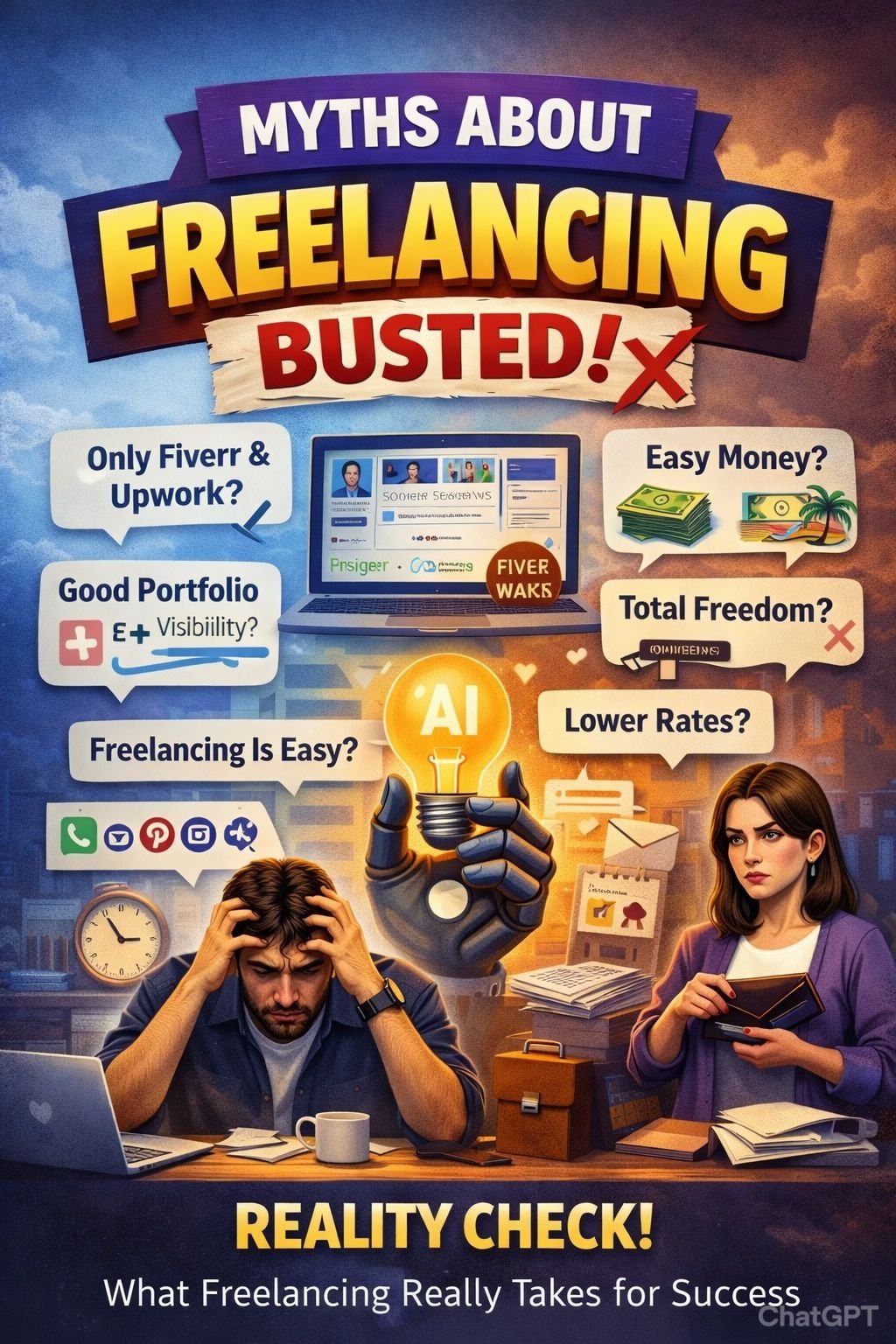
The freelance lifestyle isn’t always what it seems. While it offers obvious benefits like flexibility, independence, and income potential, it also presents challenges that people often overlook.
In this article, we’ll discuss common myths people believe before starting freelancing and explain the truth behind them with practical solutions with some websites suggested for freelancing. After understanding these key points, you’ll be better prepared to begin your freelancing journey with greater clarity and confidence.
Myth No. 1: You Can Only Make Money on Fiverr and Upwork
Platforms like Fiverr and Upwork are reliable and widely recognized in the freelancing world. However, their popularity has created a common misconception—that they are the only or best places to start. That’s simply not true. Because these platforms attract massive traffic, they also create intense competition. Thousands of freelancers with 500+ completed projects, strong portfolios, and established ratings are competing for the same clients. As a beginner with little to no experience, standing out in that environment can be extremely challenging. Ask yourself: if you were a client, would you choose someone with zero reviews or someone with hundreds of successful projects?
Then what to do? Avoid them?
No. Instead, approach them strategically. If you’re in college or already working a job, start freelancing as a side hustle. Build your skills, strengthen your profile, gather experience, and gradually establish credibility.
Myth No. 2: Only a Good Portfolio Will Increase Your Visibility
A strong portfolio is essential — but it’s only half the equation. You can have an outstanding portfolio, but if no one sees it, it won’t generate results. Clients don’t appear randomly. Visibility doesn’t happen automatically. Freelancing today requires proactive effort. Try to reach local markets. Don’t wait for the clients. Attract them. Make accounts on: Instagram, Behance, LinkedIn. Upload projects on dribbble, join different communities on Facebook. Give value and quality of your work and gain clients.
Myth No. 3: Freelancing Is Easy (Especially Because of AI)
Many people believe freelancing has become easy in the age of AI. That’s a major misconception. AI is a support tool — not a substitute for skill. If you lack clarity about your craft, AI won’t magically turn you into an expert. In fact, competition has become tougher. Businesses are optimizing costs and efficiency:
-
Why hire 10 developers when 5 skilled developers using AI can deliver the same output?
-
Why hire large support teams when AI tools can handle basic queries 24/7 at a fraction of the cost?
The market now rewards skilled professionals who know how to leverage AI effectively. AI won’t eliminate freelancers. But it will eliminate unskilled freelancers.
Myth No. 4: Freelancing Is Always Rewarding (Illusion without discipline)
Many people believe freelancing means easy money — working comfortably from home and earning without limits. Although it true but that’s not the full reality. Freelancing can be financially rewarding, but it is also demanding and uncertain. Some people leave stable jobs assuming quick success. Some students sacrifice their studies and experiment with freelancing without proper skills or strategy. But freelancing does not guarantee success. It is a one-person business. You are responsible for:
-
Delivering the work
-
Finding clients
-
Marketing yourself
-
Managing relationships
-
Handling payments and negotiations
Without strong core skills, patience, and consistency, you won’t be able to survive in the world of earning money through Freelancing.
Myth No. 5: Freelancing = Freedom
Freelancing is often marketed as “complete freedom.” Yes, you may not have a traditional boss, but you do have clients, deadlines, expectations, and performance pressure. In the beginning especially, you don’t always choose:
-
The type of projects
-
The budget
-
The timeline
-
The working hours
When you’re building your reputation, clients often set the terms — not you. True freedom in freelancing comes later after you build skills, credibility, and consistent demand. Freedom is earned. It is not automatic. If you believed in this myth, you need a mindset shift. Know that you would have you have to work hard, handle clients, manage invoices, generate leads and many more. So, be consistent.
Myth No. 6: Lowering Your Rates Will Attract Clients
Many beginners think the key to landing clients is working for free or charging very little for their hard work. This is a big misconception. Undervaluing yourself rarely leads to sustainable freelancing success. Instead, focus on strategy, professionalism, and preparation:
-
Show real-world mock projects: Create demos tailored to client requirements to build trust and clarity.
-
Use modern portfolios: Platforms like Framer, Notion, or WiX make your work look professional — don’t rely on simple Google Drive links.
-
Think like a business: Treat every project systematically, from outreach to delivery.
-
Add complementary skills: Upskill to offer more value and stand out.
-
Be proactive: Cold emails, direct outreach, and networking often bring better opportunities than relying solely on freelance platforms.
Remember, Freelancing is a business, not charity work. Price your skills fairly, present yourself professionally, and clients will respect your value.
Conclusion:
Freelancing is full of opportunities, but it’s not the effortless, guaranteed path to wealth that many believe. The six myths we’ve busted — from relying solely on popular platforms, overestimating the power of a portfolio, assuming AI makes everything easy, expecting instant rewards, thinking freelancing equals freedom, or undervaluing your work — all highlight one key truth: freelancing requires skill, strategy, and persistence. Success doesn’t come from shortcuts. It comes from building strong core skills, proactively marketing yourself, understanding clients’ needs, and treating freelancing as a real business. The freelancers who thrive are the ones who combine expertise with smart strategy, continuously learn, and maintain professionalism in every interaction. If you take these lessons to heart, you’ll avoid the common pitfalls that hold beginners back and you’ll be better prepared to start your freelancing journey with clarity, confidence, and a real chance at sustainable success.
Some other freelancing websites that you can try:
If you are a beginner and want to build a professional Freelance Profile that gets client, check out the following article on this topic:
Professional Freelance Profile Guide for Beginners (Get Clients Fast)
